Description
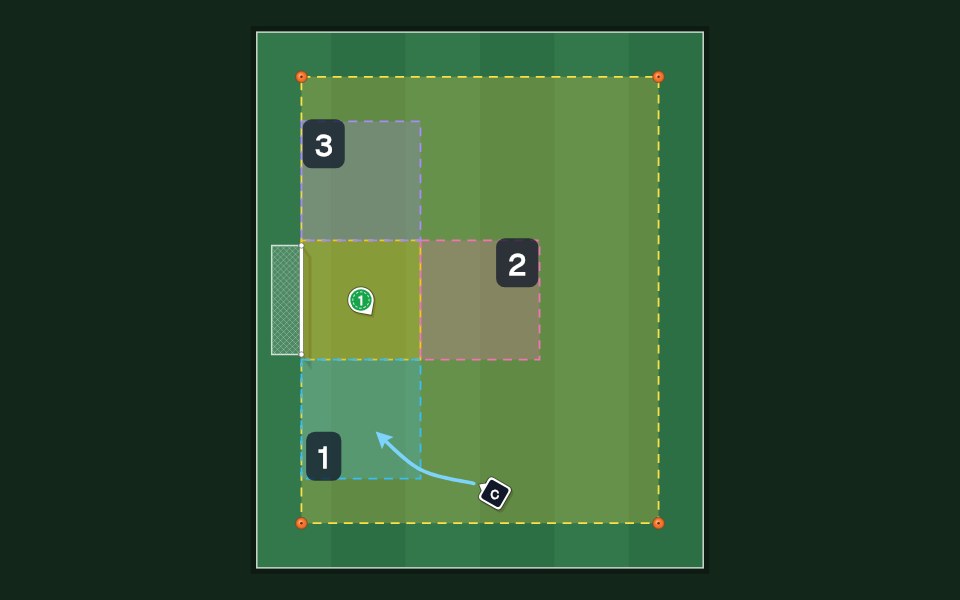
A thrower lobs high balls towards the zones. The goalkeeper starts each ball in the start box in front of the goal and moves to catch the ball before it bounces in a zone. Zone 1 is used first, then zones 2 and 3 are added. Each catch scores a point, and so does a throw that misses all the zones.
Organisation
Mark a quarter pitch of 24 x 30 m with four cones, with a full-size goal on one end line. Mark a start box of 8 x 8 m in front of the goal. Mark zones 1 and 3 of 8 x 8 m on each side of the start box, and zone 2 of 8 x 8 m in front of it. The thrower stands to the side, about 12 m from the end line, and varies the position of the throw. Swap roles after 5 balls. The goalkeeper with the most points wins. Make it easier with smaller zones or a fixed order of zones. Make it harder with larger zones or a kicked cross.
Coaching points
- Use an underhand catch with the forearms together to wrap the ball.
- Use an overhand catch with the hands behind the ball and the fingers spread.
- Drive one arm and the opposite knee up to support the jump.
- Take the first step early after you judge the flight of the ball.